


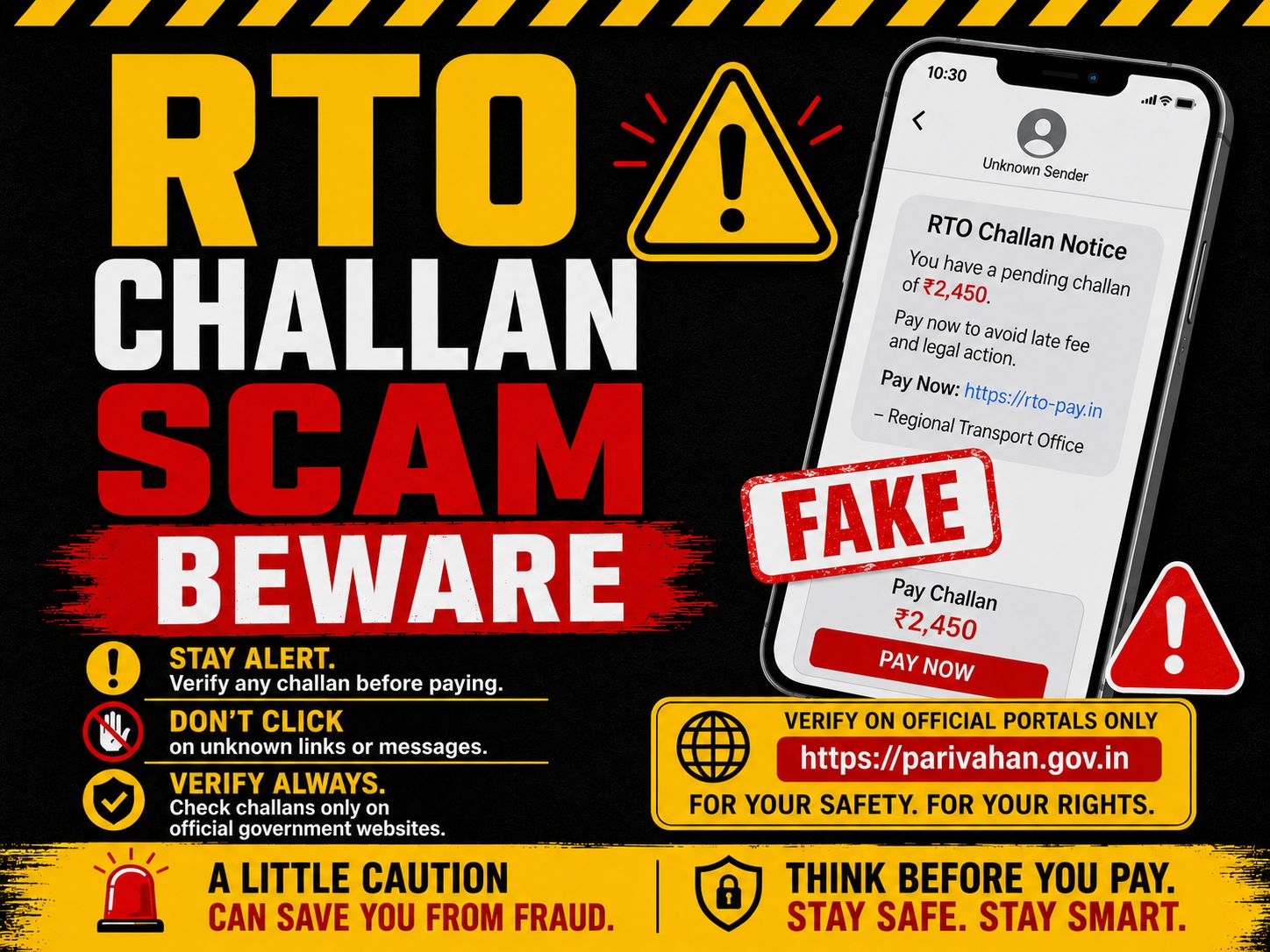
Ever gotten a text saying you have a pending traffic fine and felt that little jolt of panic? You're not alone. A lot of people across India have been receiving fake RTO messages lately, and unfortunately, quite a few have ended up losing real money to them. Let's talk about how this scam works, and more importantly, how you can protect yourself from it.
What Exactly is the RTO Challan Scam?
Here's how it usually plays out. You get an SMS, a WhatsApp message, or sometimes even an email saying you have an unpaid traffic challan. The message looks official, uses government-style language, and includes a link asking you to pay immediately. But that link doesn't take you to any government website — it takes you to a fake page built to steal your card details.
This isn't some small, occasional scam either. There have been real cases where people lost lakhs of rupees just by trying to pay what looked like a small pending fine.
How Scammers Actually Pull Off Their Scams
It's worth understanding the tricks these scammers use, because once you know the pattern, it becomes a lot easier to spot.
They send convincing messages. These fake RTO messages often say things like your licence will be suspended, or thata court notice has been issued against you. The idea is to scare you into acting fast without thinking twice. And unlike genuine government alerts, these usually come from regular 10-digit mobile numbers instead of verified sender IDs.
They use fake links that look real. The web addresses in these messages are designed to resemble the official Parivahan portal, but they're not the same. In fact, there are dozens of fake domains out there pretending to be genuine RTO e-Challan websites.
They build cloned websites. Once you click, you land on a page that looks almost identical to the real government portal, showing fake violation details to make it all feel legitimate.
They ask for card details only. This is a big giveaway. A significant warning sign is when a payment page exclusively accepts card payments and does not allow UPI or net banking.
How to Spot a Fake RTO Message
Now that you know how the RTO challan scam operates, here's how you can actually tell a fake message apart from a real one.
Check the website address carefully. Genuine government portals always end in .gov.in. If the link ends in .com, .in, .online, or anything else, it's not official.
Look at who sent it. Real challan messages usually come from verified sender IDs like VK-VAAHAN or AD-TRAFIC, not from a random personal mobile number.
Notice the tone. Scam messages tend to sound urgent or threatening, throwing around words like "arrest warrant" or "immediate action required". Actual government communication is far more formal and neutral.
Watch the payment options. As mentioned earlier, if it's pushing you toward card-only payment, be extra cautious.
Check for missing information. A real challan will always include details like the challan number, your vehicle number, and the location of the offence. If these are missing, that's another sign something's off.
How to Check Your Actual Challan Status Safely
Instead of clicking any link from an RTO message you receive, it's always safer to check directly:
Open your browser and type the URL yourself — don't click on links from texts or WhatsApp.
Go to the official Parivahan e-Challan portal.
Look for "Check Challan Status".
Enter your vehicle number along with the last 5 digits of your chassis or engine number.
If it shows "No Challan Found", you can be confident that the message you received was fake.
What to Do If You've Already Clicked a Fake Link
Mistakes happen, and if you've already clicked on a suspicious link, don't panic — just act quickly. The first hour really matters here.
Call 1930, the National Cyber Crime Helpline, right away.
Contact your bank immediately and block your card.
File a report on the official cybercrime portal.
Save screenshots of the message and any transaction details, in case you need them later.
A Few Simple Habits That Keep You Safe
Never click on payment links that arrive through SMS or WhatsApp.
Always double-check that a website ends in .gov.in before entering any details.
Never share your OTP, CVV, or card number with anyone, no matter how official the request sounds.
Turn on transaction alerts for your bank accounts so you notice anything unusual right away.
Talk to your family, especially elders, about this scam. They're often the ones targeted the most.
📲 Message us on WhatsApp to book your first Car Training session or ask about RTO services — we'll take it from there.
Learn in your own car or ours.
Final Thoughts
The RTO challan scam keeps getting smarter, using fear and official-looking messages to catch people off guard. But once you know what to look for, it's honestly not that hard to spot. So the next time an RTO message lands in your inbox claiming you owe a fine, take a breath, don't click anything, and check it directly through the official Parivahan website instead. A few extra seconds of caution can save you a lot of trouble later.